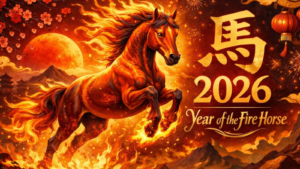
2026 marks the rare Year of the Fire Horse, a dynamic, passionate, and transformative period symbolizing freedom, energy, and bold action. This year brings opportunities for innovation, social change, and breaking free from limitations, but also requiring mindful, authentic progress. Historically, Fire Horse years often bring cultural shifts and significant social movements.
The Chinese New Year begins on February 17th. In China and across many countries in Asia, the new year is the most significant holiday of the year. Families host reunions, share traditional foods and light fireworks. Streets are adorned with red lanterns which symbolize prosperity and happiness. Red envelopes with money are gifted from elders to younger family members.
In Vietnam, the new year is also known as Tết, featuring flower markets, honoring ancestors, red envelopes filled with cash are given to children and traditional food such as savory rice cakes are served.
In Korea the Lunar New Year is called Seollal, a celebration marked by family gatherings, folk games, and special foods like rice cake soup.
In Thailand, vibrant street markets, dragon dances and lantern festivals are held.
Chinese New Year celebrations were banned in Indonesia until 2002. While it’s still not a national holiday, it is now marked with shop closures, decorations, and gifts of citrus or flowers. Regions with significant Chinese populations, observe the Lunar New Year, called Imlek. You may see red lanterns, temple ceremonies, lion dances, and festive gatherings.
In Japan, the Lunar New Year is not a national holiday but still celebrated by Chinese communities, with family gatherings, traditional food and elders passing red envelopes with cash to children. Japanese have similar traditional celebrations for the New Year’s on January 1st.
